01Requirements
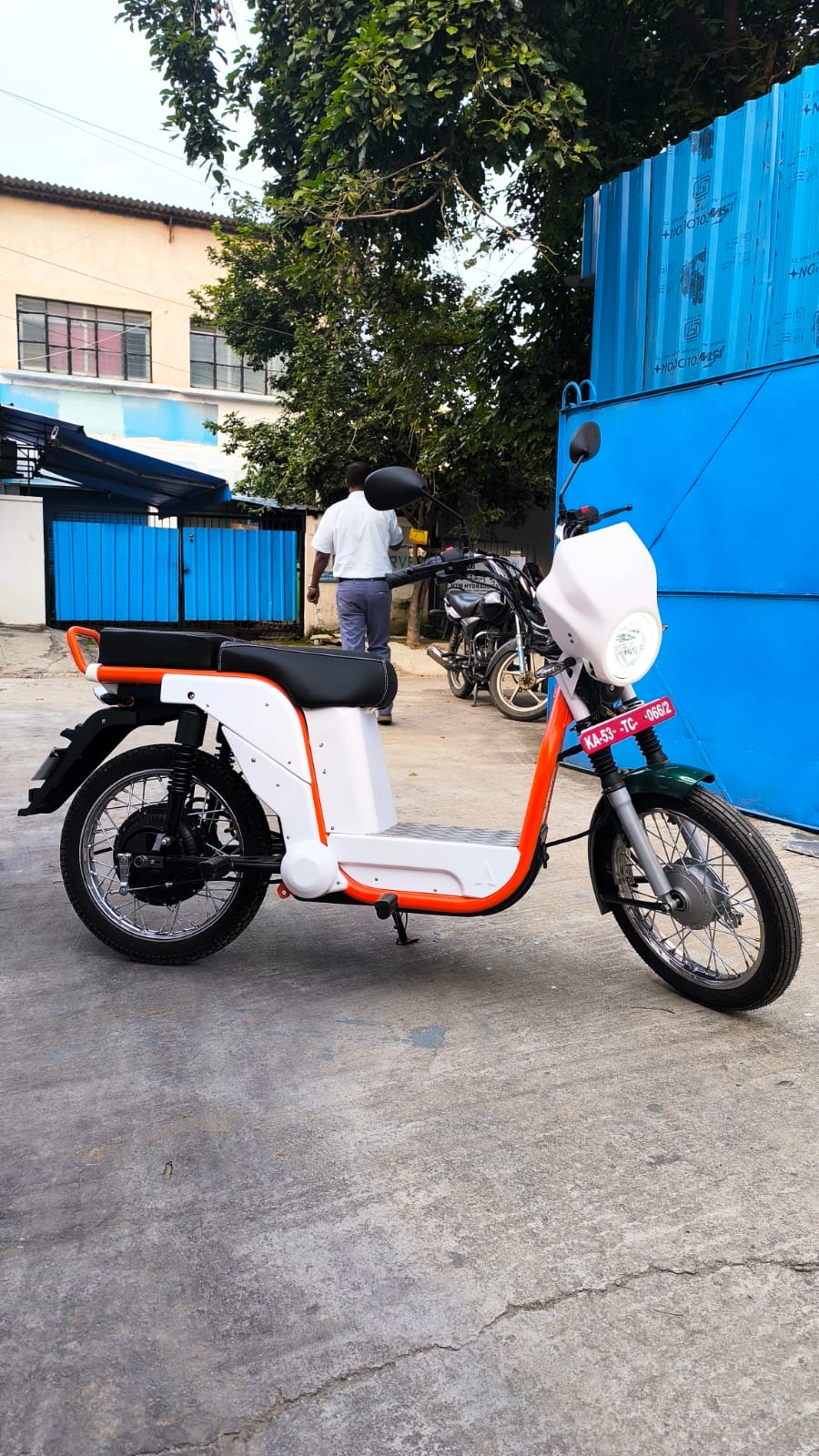
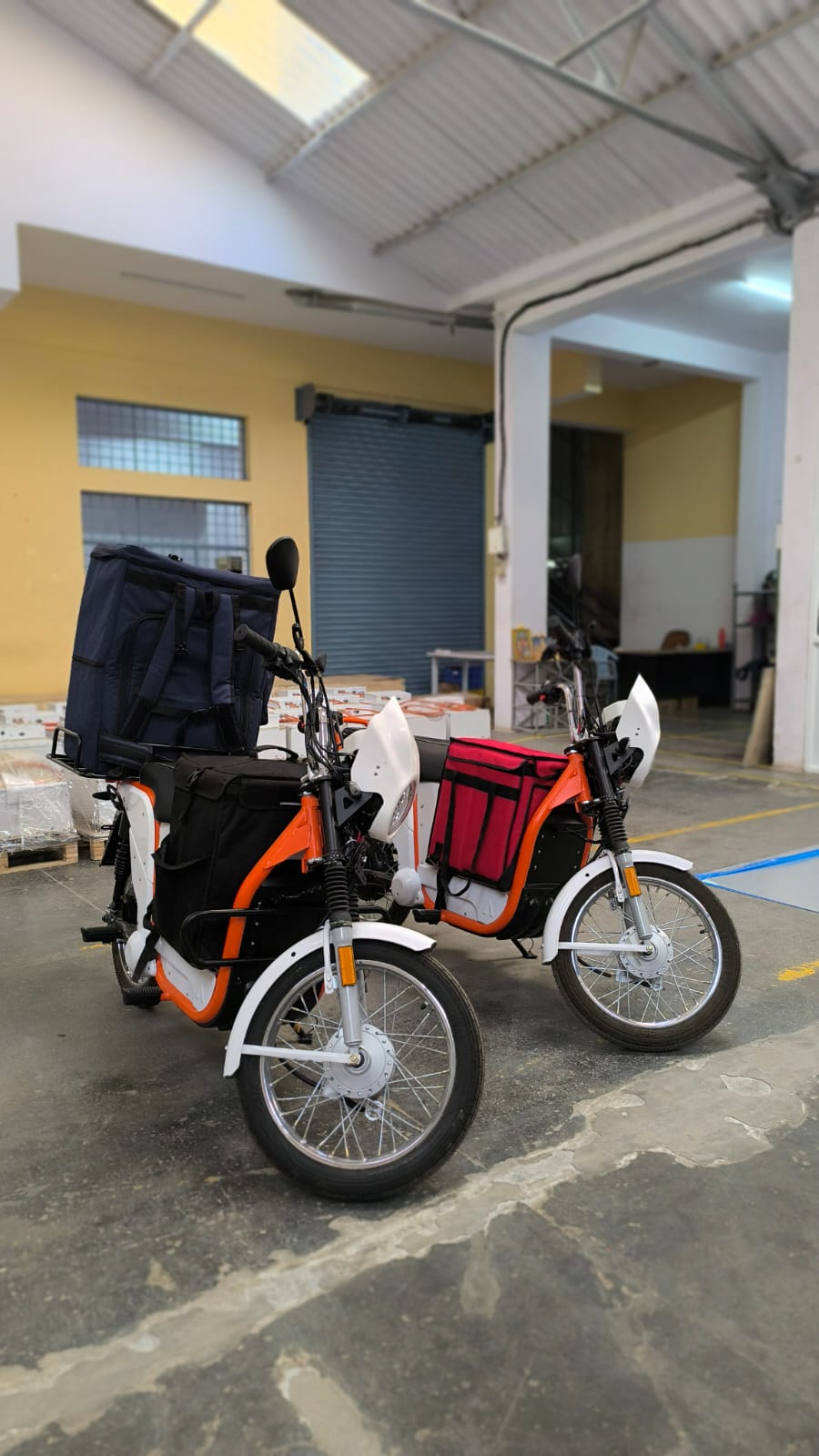
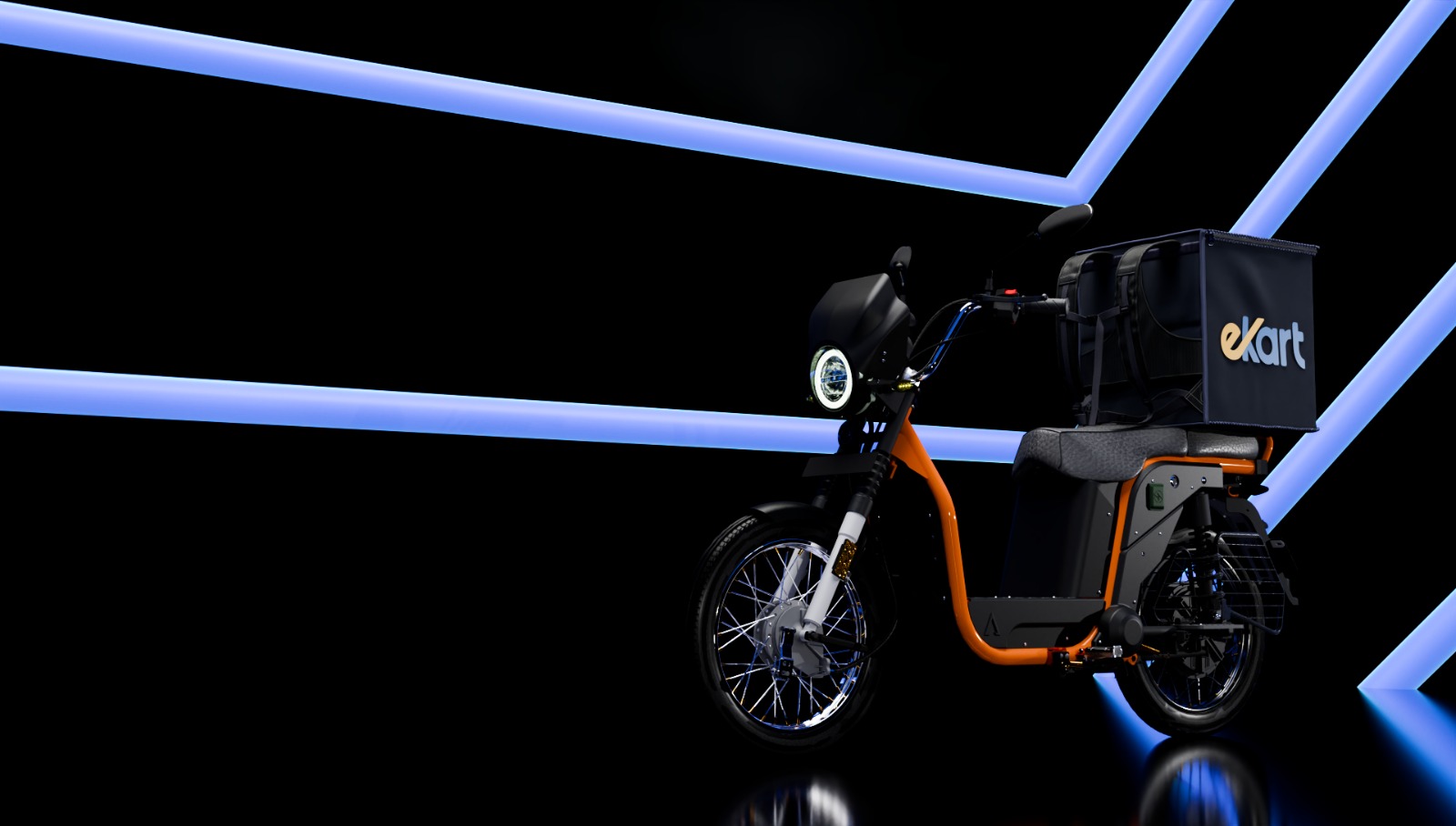
- Last-mile delivery EV with swappable battery, front and rear cargo capacity
- Battery pack compliant with AIS-156 (Indian EV battery safety standard)
- Vehicle roadworthy to ICAT certification standard
- Chassis manufacturable at low volume (jig welding) with a clear path to scaled production
- Production cost targets at 20 / 100 / 1,000 units-per-month ramp scenarios
02Key Decisions
Swappable vs fixed battery?
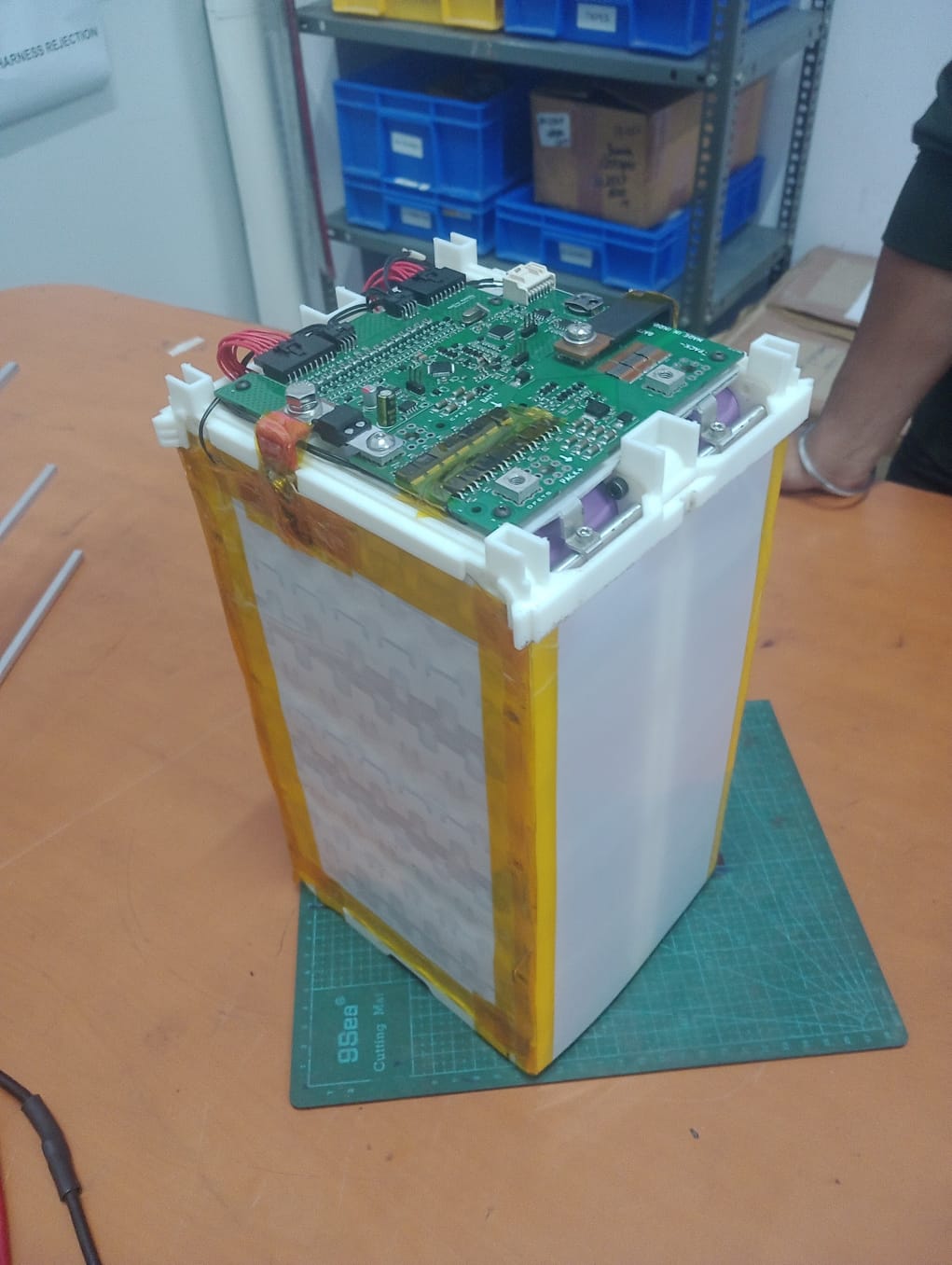
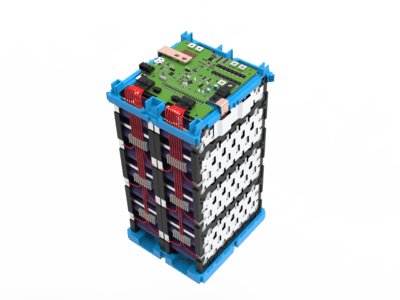
Swappable 3.2 kWh pack. Delivery riders can't wait for charging; a removable pack lets fleet operators hot-swap. Drove the entire packaging layout — pack weight, handle ergonomics, rail mounting and connector design all followed from this choice. A 2.5 kWh variant was validated through FEA as a lighter option.
Tube chassis vs stamped/cast frame?
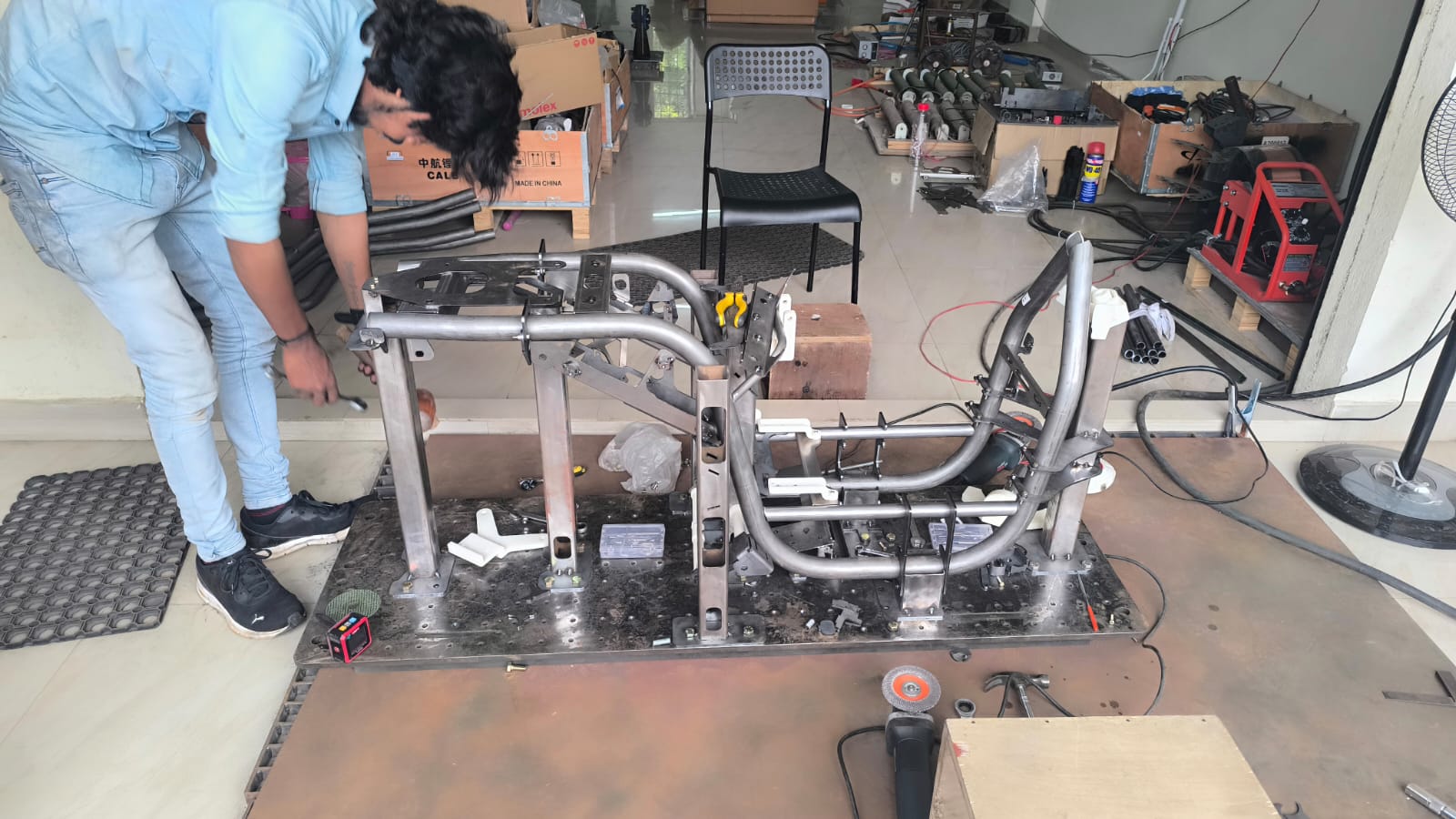
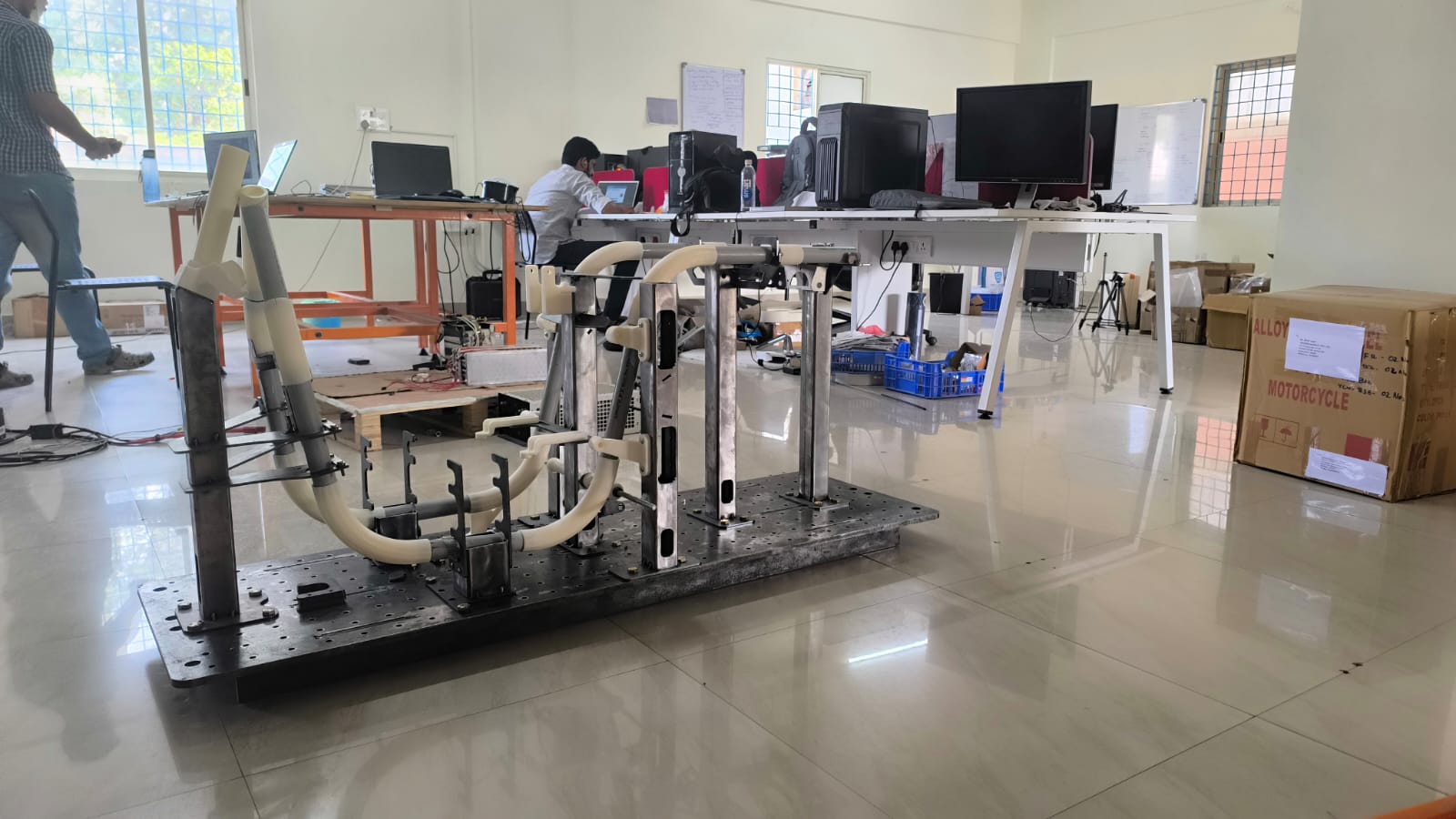
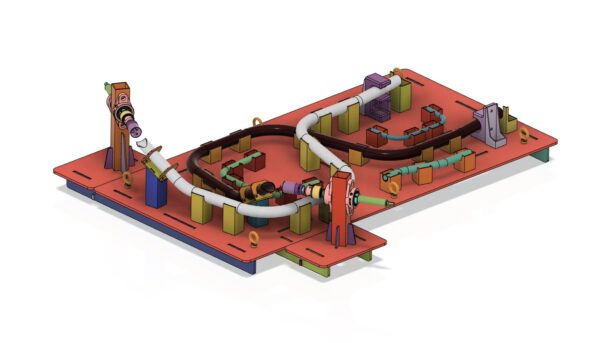
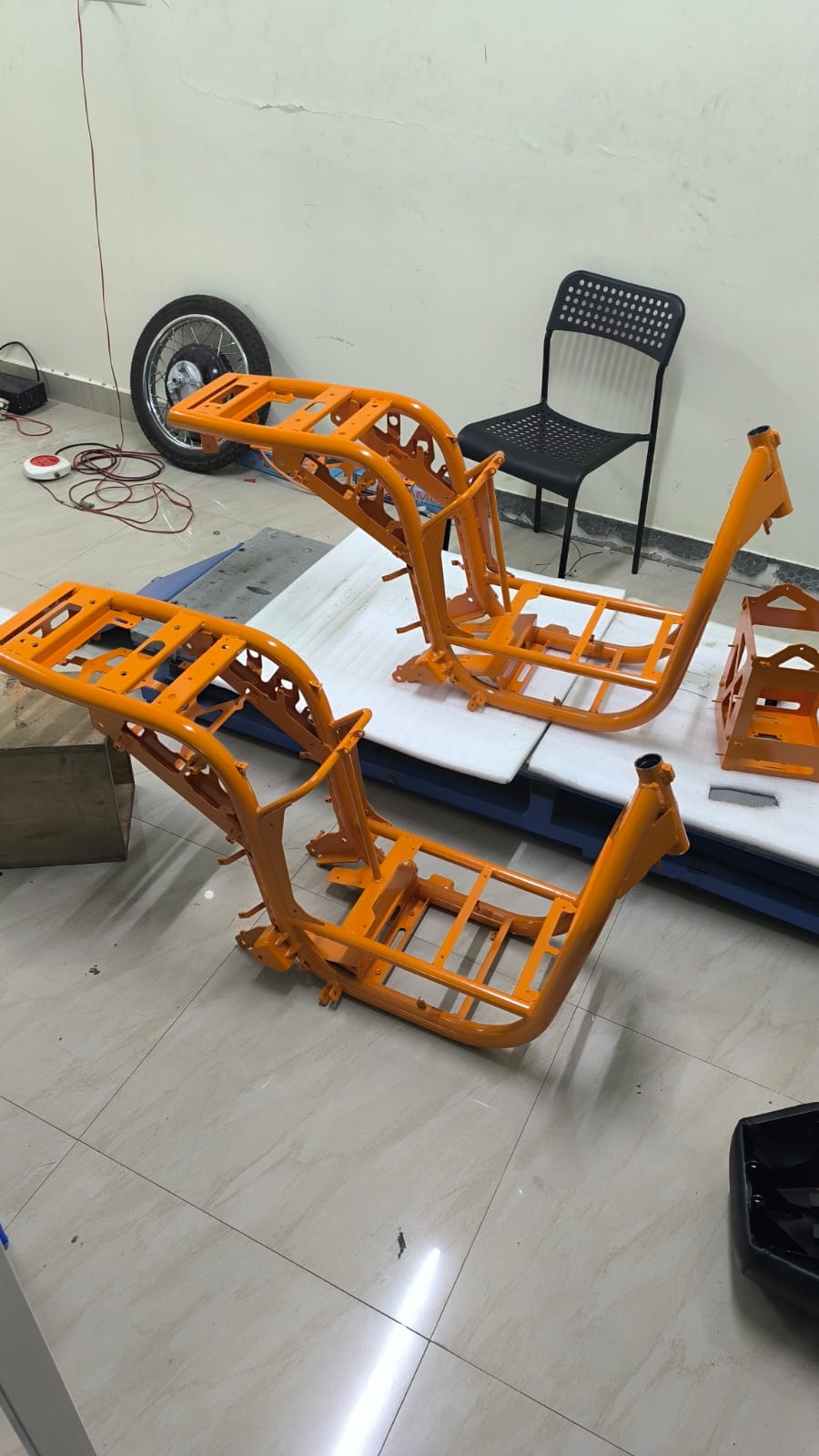
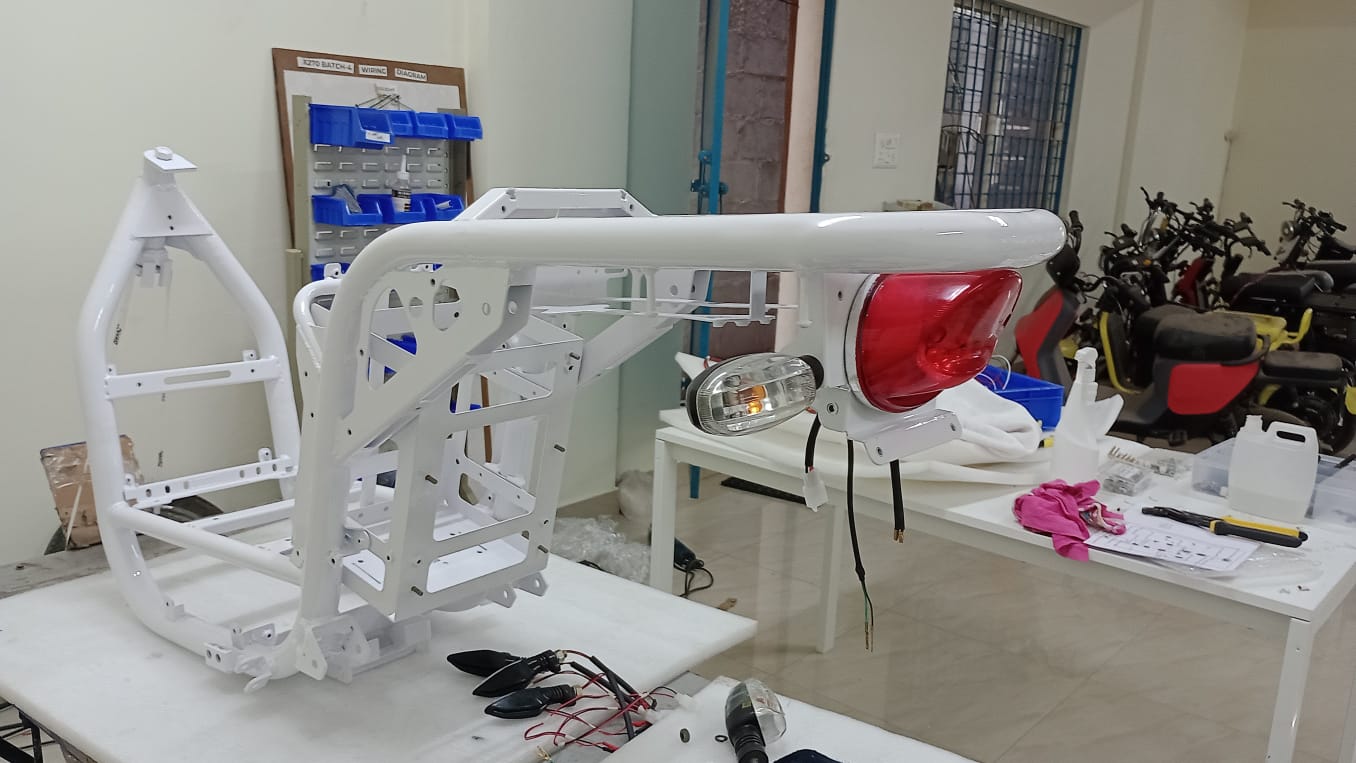
Welded tube chassis on fixtures. At prototype and early-production volumes, tooling for stamping is unjustifiable. Tube + jig welding gave design freedom across 6 prototype iterations; fixtures and bend-checking templates kept geometry repeatable between builds.
Analysis tool and targets?
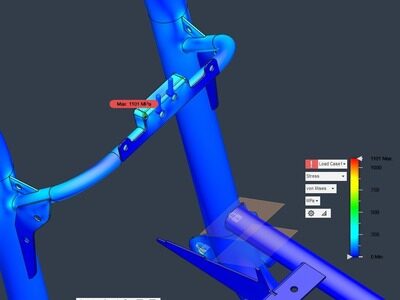
Nastran for chassis stiffness and fatigue, with headstock stiffness as the critical metric for handling. FEA results drove tube wall thickness and gusset placement before each prototype round.
03Process
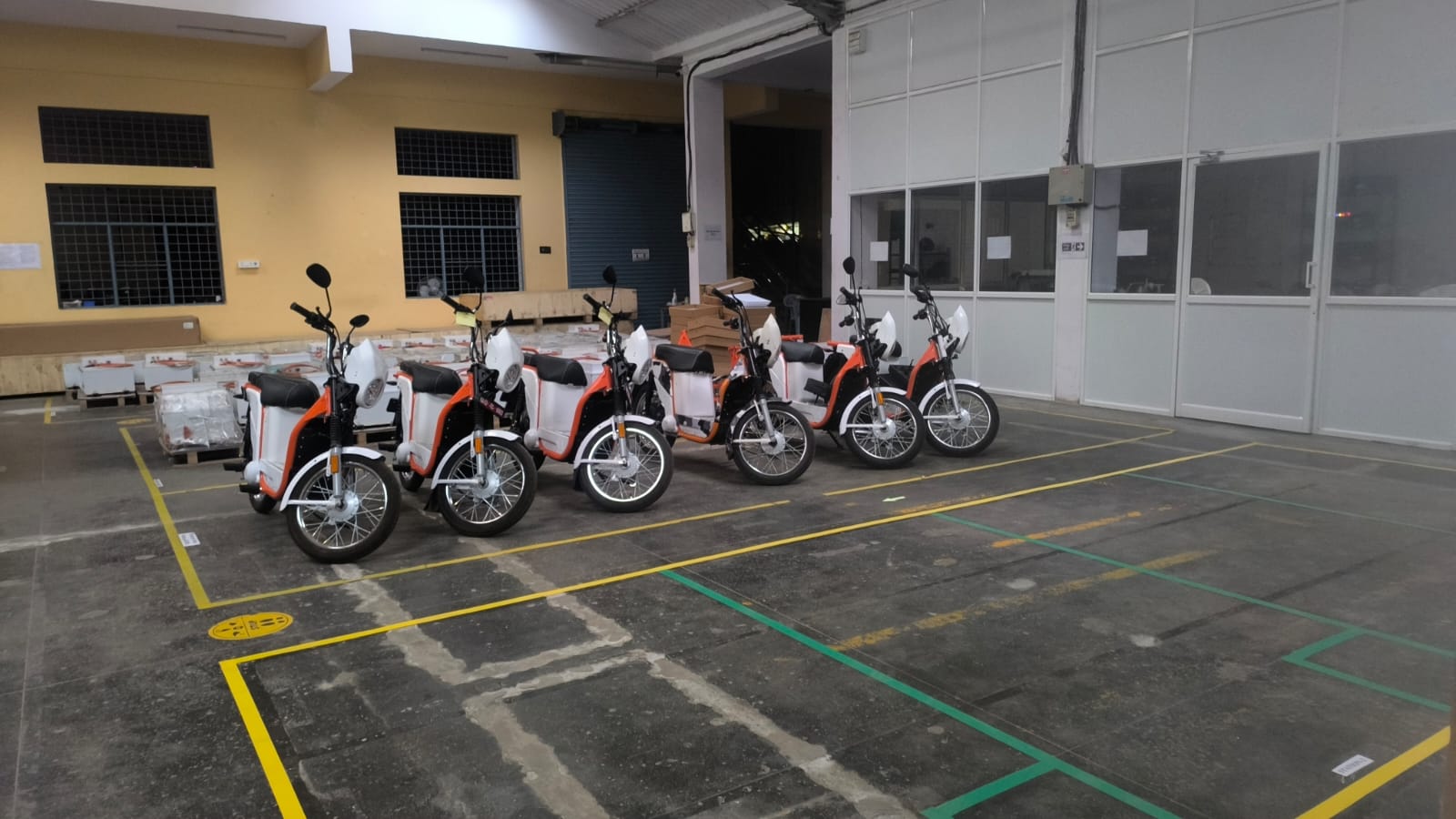
Vehicle architecture and 3D packaging with ergonomic studies came first, then chassis design and FEA, then prototype builds on welding fixtures. Each of the 6 beta vehicles incorporated lessons from the previous: revised mounting points, improved cable routing, refined battery rails. The second prototype completed a 12,000 km durability programme; findings were fed back into the design before the certification builds. In parallel, the team produced production BOMs and manufacturing drawings for three ramp scenarios (20/100/1,000 units per month) so costing was ready for investor and supplier discussions.
04Battery Pack & Harness
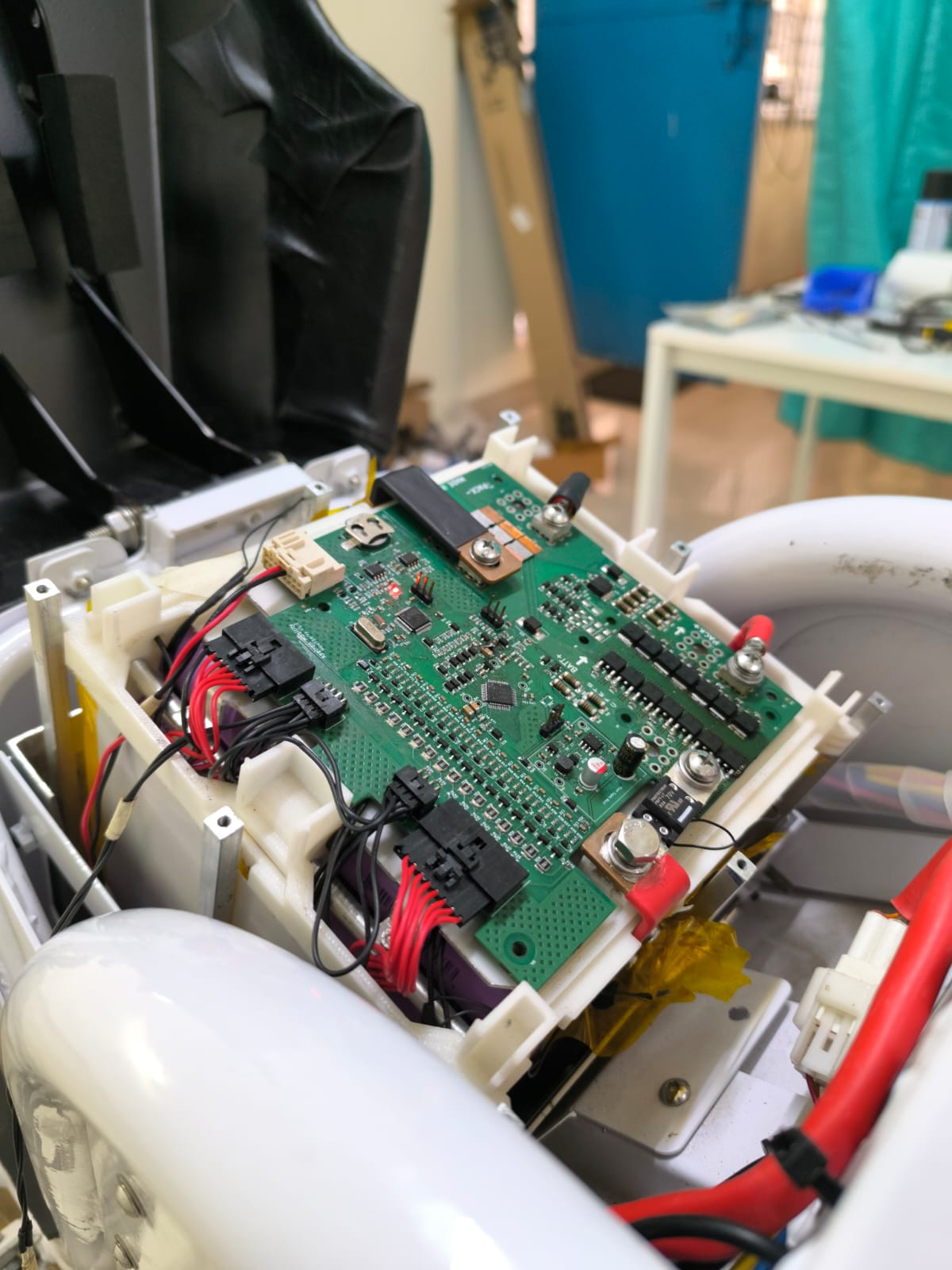
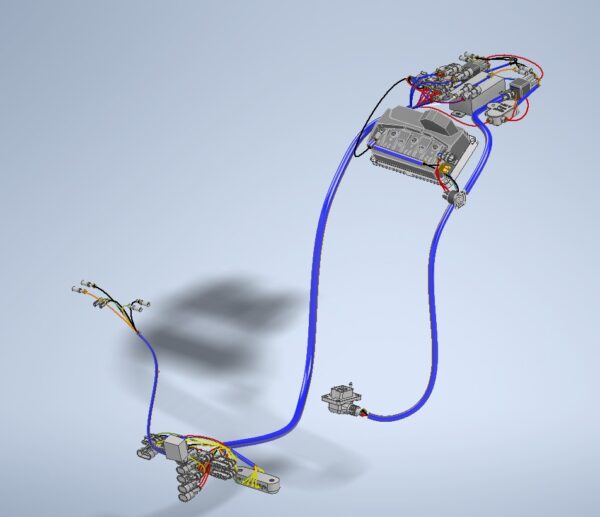
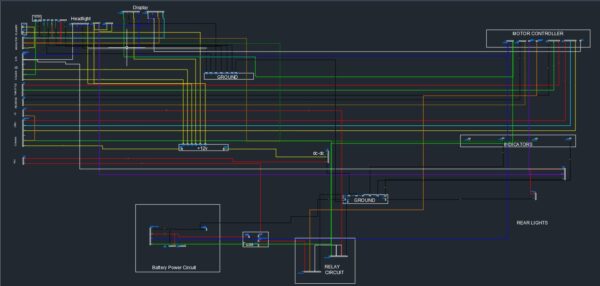
The 3.2 kWh swappable pack went from bench prototype (cells + BMS PCB) through FEA-validated enclosure design to the production pack with moulded cover (see the battery cover die case study). The full vehicle harness was developed with AutoCAD Electrical schematics, 3D routing in Inventor and nailboard drawings for the build shop.
05Challenges
Reverse-current fault tripping short-circuit protection
During rapid throttle cutoff, reverse current through the harness triggered the BMS short-circuit protection — intermittent, hard to reproduce, and it killed the vehicle mid-ride. Root cause analysis traced it to inductive kickback at the relays. Fix: TVS diodes at the relay coils. Fault never recurred across the durability programme.
Durability findings at 12,000 km
The long-distance programme exposed real-world failure modes that FEA alone wouldn't catch — fastener loosening, routing wear points and bracket fatigue — each fed back into the design before certification builds.
Designing for three production volumes at once
Every part decision had to survive three different manufacturing strategies (20/100/1,000 per month). This forced disciplined make-vs-buy analysis and drawings that worked for both jobshop and scaled suppliers.
06Outcome
Delivered
6 beta vehicles built and validated · 2 submitted for ICAT roadworthiness certification · AIS-156-compliant 3.2 kWh swappable pack · 12,000 km durability completed · production documentation ready for 1,000 units/month ramp.