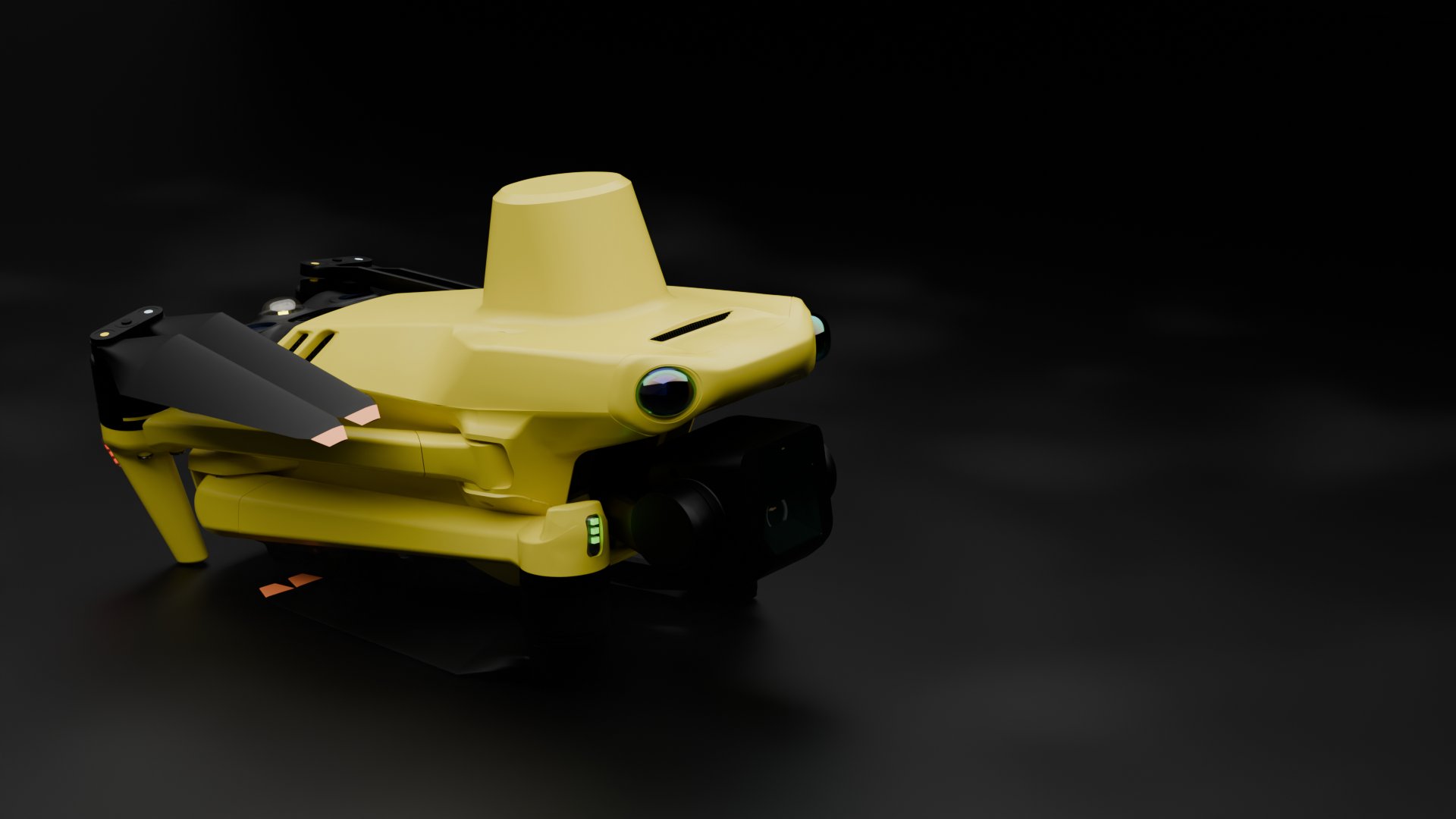
This is the project on my desk right now: take a drone that has been built in small batches and design a line that can put out 500+ units a month — without throwing away the tooling the first time volume doubles. These are my working notes, written while the line is still coming together rather than after the fact.
Start from takt, not from the station count
The temptation is to sketch stations first. I work backwards from takt time instead. If the target is 500 units a month across a single shift, takt sets the rhythm every station has to hit. Once that number is fixed, everything else — how much work lives at each station, how many operators, where buffers go — becomes a balancing problem against a known beat rather than a guess.
If a station can't finish inside takt, it doesn't get a faster operator — it gets split. People are not the variable you tune first.
Balance the line around the slowest honest step
Every line has one station that quietly sets the pace. For this build it's the final electronics integration and check — it can't be rushed without paying for it later in field returns. So I balance the mechanical stations around that step: pull non-critical work upstream, pre-kit anything that can be pre-kitted, and keep the bottleneck doing only value-add work.
- Pre-kitting: fasteners, standoffs and small hardware arrive at the station in a tray, not a bin. Counting hardware is not assembly.
- Poka-yoke: connectors and brackets that can only go in one way. The cheapest defect is the one the design won't allow.
- Sub-assembly offload: arm and frame sub-assemblies built in parallel and fed in, so the main line never waits on them.
Design for the ramp, not just for today
The brief isn't "500 a month." It's "tens now, hundreds soon, without re-tooling." That changes the design choices. Fixtures get duplicated rather than made faster. Stations are modular so a second identical cell can be dropped in when volume calls for it. The BOM and work instructions are versioned so a new operator is productive in a shift, not a week.
Where it stands
Right now I'm validating station times against takt with the first physical fixtures and pressure-testing supplier lead times — the line is only as fast as the part that shows up last. The interesting failures so far have been about flow, not about any single part. More on that as it develops.
If you're working on something similar, or hiring for it, I'd be glad to compare notes — drop me a message.